Aligning the Three Treasures of Body, Breath, and Mind to awaken the healer within.
Imagine a glass tea carafe.
The carafe represents the body.
The hot water represents the breath.
The tea leaves represent the mind.
Separately, each element exists on its own.
Together, they transform into something alive.
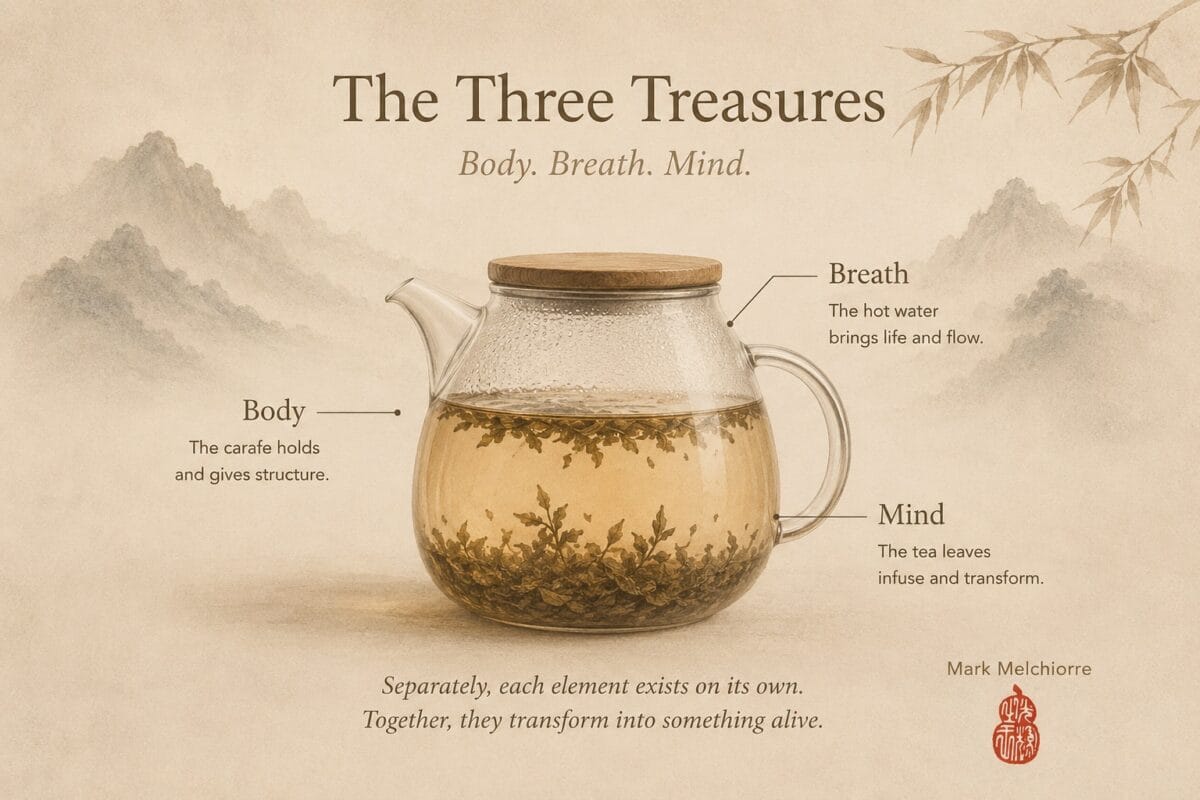
In Taoist tradition, body, breath, and mind are known as the Three Treasures.
The Three Mindful Alignments are the practice of bringing these treasures into harmony with one another in the Tao — unifying the body, calming the breath, and settling the mind into one integrated experience.
In Qigong and Tai Chi, we cultivate the three treasures together. Conscious awareness begins to diffuse through the whole being like tea spreading through warm water, awakening what Taoist traditions call the healer within.
This is the foundation of the Three Mindful Alignments.
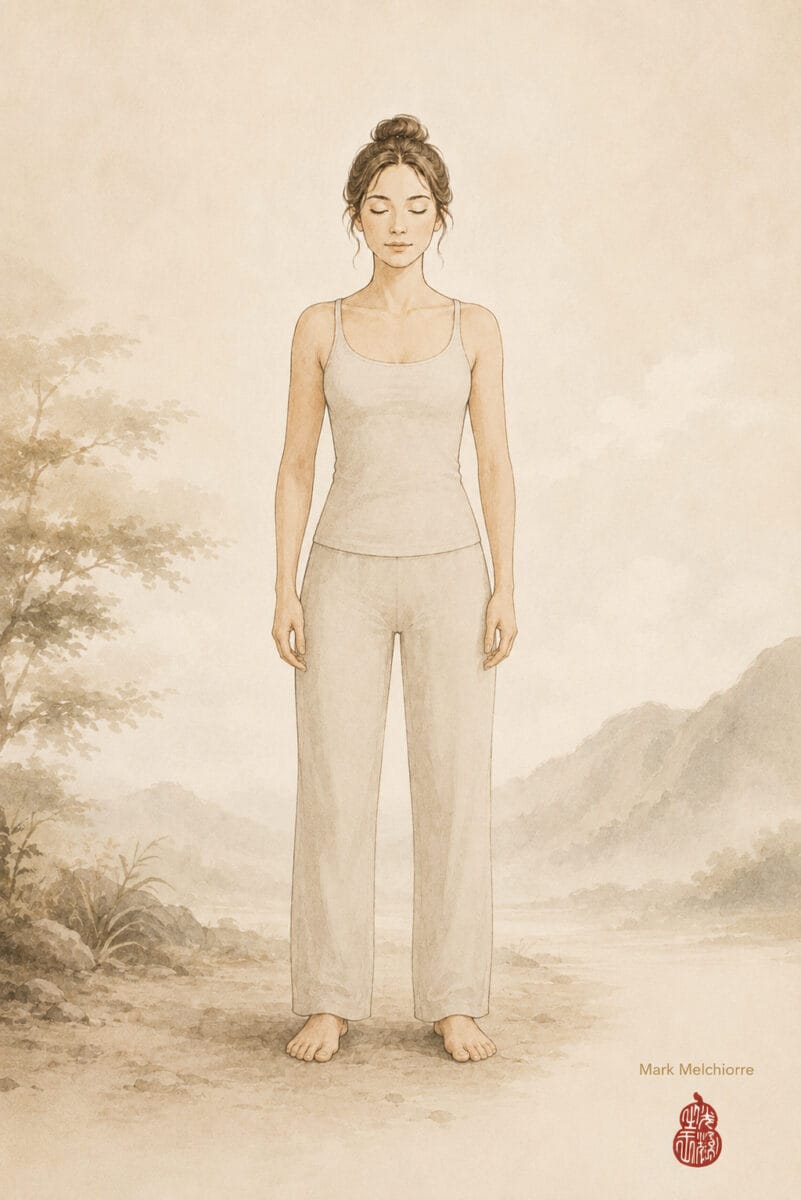
Body — Rooted Between Earth and Sky
The first of the three treasures is the body.
Before movement begins, we establish an upright and relaxed posture that connects us with the energies around us — the earth beneath us, the sky above us, and the living world all around us.
Bring your awareness to the soles of your feet. Feel your contact with the ground. Allow the earth to support you.
Then gently lift the crown of the head toward the sky. Not as a strain or stretch, but as a subtle adjustment that brings the skeletal system into natural alignment.
Feet rooted to earth. Crown lifted to sky.
Between those two points, allow the body to soften. Release unnecessary tension from the muscles. Let the shoulders relax downward. Keep the joints loose and responsive. The knees remain slightly bent and springy like shock absorbers.
The goal is not stiffness, but relaxed structure — an upright body supported by ease rather than force.
When the body settles into alignment, Qi can move more freely through the system and prepare us for deeper practice.
Breath — Deep, Quiet, Natural
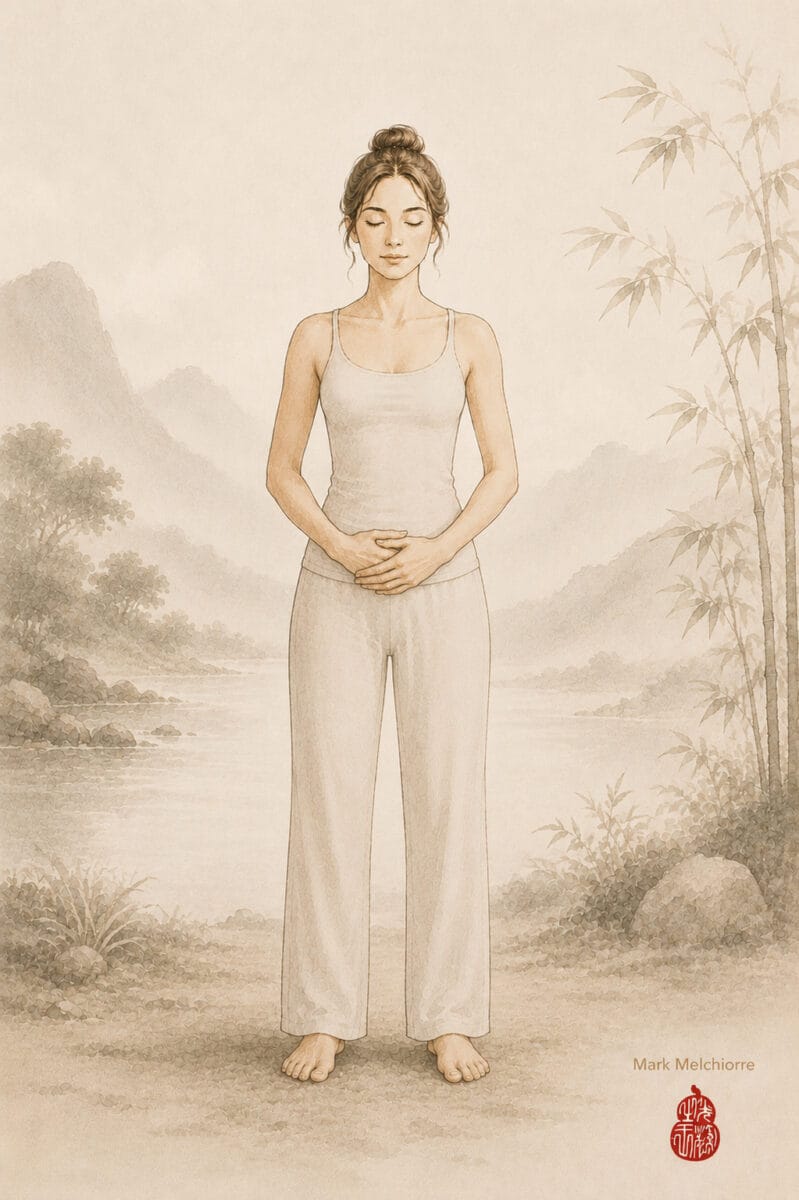
The second treasure is the breath.
We begin simply by becoming aware of it.
Notice where you feel the breath most clearly. Perhaps at the nostrils, the back of the throat, or deep within the body itself. Allow your awareness to follow the natural rhythm of breathing without forcing or controlling it.
As the breath settles, allow it to deepen gently into the lower abdomen.
With the inhale, the abdomen softly expands outward as the diaphragm draws the breath downward. With the exhale, everything relaxes back toward center.
These are not forceful breaths or exaggerated breaths. In Qigong, we seek deep breathing rather than full breathing. The breath is relaxed, quiet, and unhurried.
As the breath slows, the nervous system begins to settle. The body softens. The mind becomes calmer and more present.
The breath becomes the bridge between body and mind, helping the three treasures move together as one.
Mind — Receptive and Directing
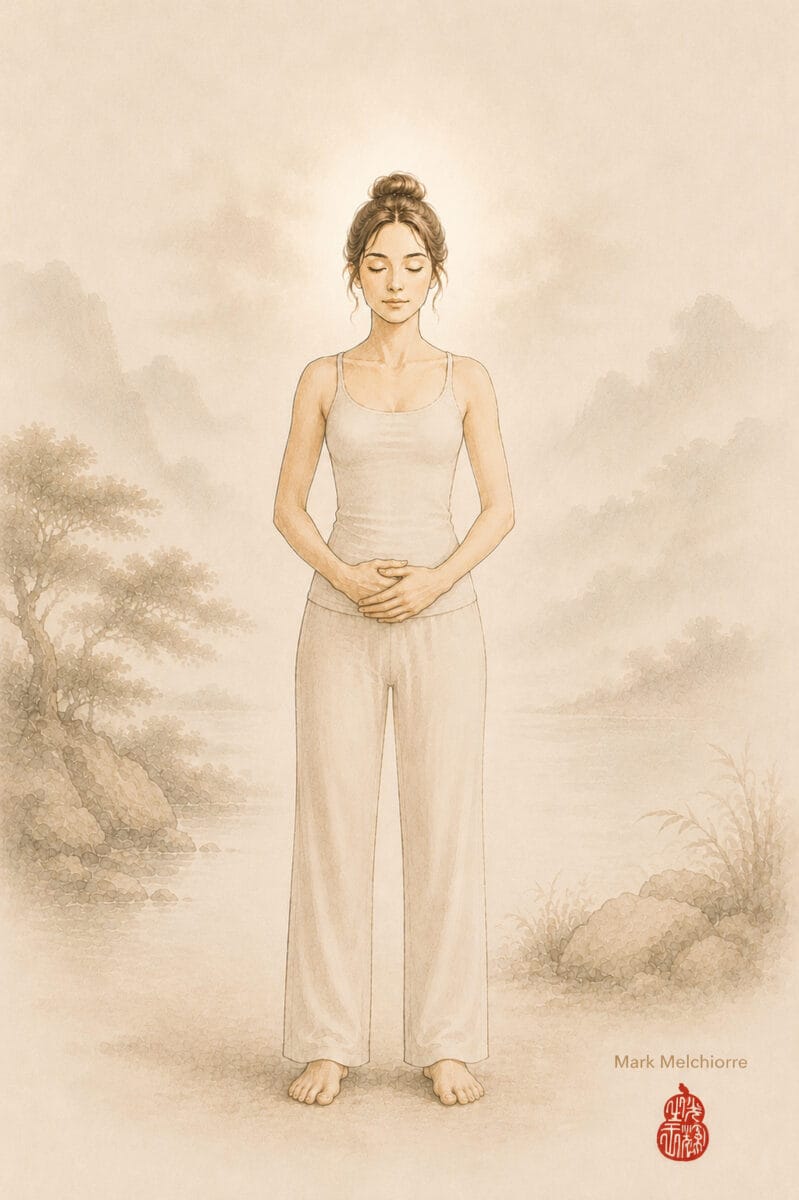
The third treasure is the mind itself.
By this point we have already begun calming the mind through posture and breath, but now we consciously guide our awareness inward.
Notice where your thoughts are. Allow distractions and mental tension to gradually settle. Rather than chasing thoughts away, simply return your attention to what the body is experiencing in the present moment.
Feel the contact of the feet with the earth. Feel the movement of the breath. Listen to the signals of the body and the senses.
In Taoist practice, the mind contains both Yin and Yang qualities.
The Yin aspect of the mind is receptive. It listens, observes, and receives information through the senses and through the body itself.
The Yang aspect of the mind directs intention. It guides awareness through the body, directs movement, and leads the flow of Qi.
Movement begins with intention. The body follows where the mind leads.
As body, breath, and mind align together, practice becomes more than physical movement. Awareness begins to diffuse through the whole being, awakening what Taoist traditions call the healer within.
Guided Practice:
Continue Exploring
Explore additional practices and resources that support balance, mindfulness, and daily well-being.
Nine Phases Qigong
A qigong practice that guides you step-by-step—from first sensing qi in the body to refining and integrating it at deeper levels of mind and spirit.
Breath Medicine
An introduction to the transformative role of breath in cultivating relaxation, awareness, resilience, and energetic harmony.
Yin-Yang Balancing Qigong
A calming practice that harmonizes opposing energies within the body while encouraging grounding, fluidity, and centered awareness.
Continue Exploring
Explore additional practices and resources for balance, mindfulness, and daily well-being.
Nine Phases Qigong
A step-by-step qigong practice for sensing, refining, and integrating qi.
Breath Medicine
Explore how breath supports relaxation, awareness, and resilience.
Yin-Yang Balancing Qigong
A calming practice that cultivates grounding, fluidity, and inner balance.
Practices
Explore practices for balance, awareness, and daily well-being.
Recommended Resources
Books, videos, and learning materials for further study and inspiration.