A Simple Practice for Energy, Balance & Well-Being
Tai Chi Easy™ combines gentle tai chi and qigong movements into an accessible practice that supports relaxation, mobility, breathing, and mindful awareness.
Whether you are completely new to energy practices or returning after years away, these movements offer a practical way to reconnect with your body and calm your nervous system.
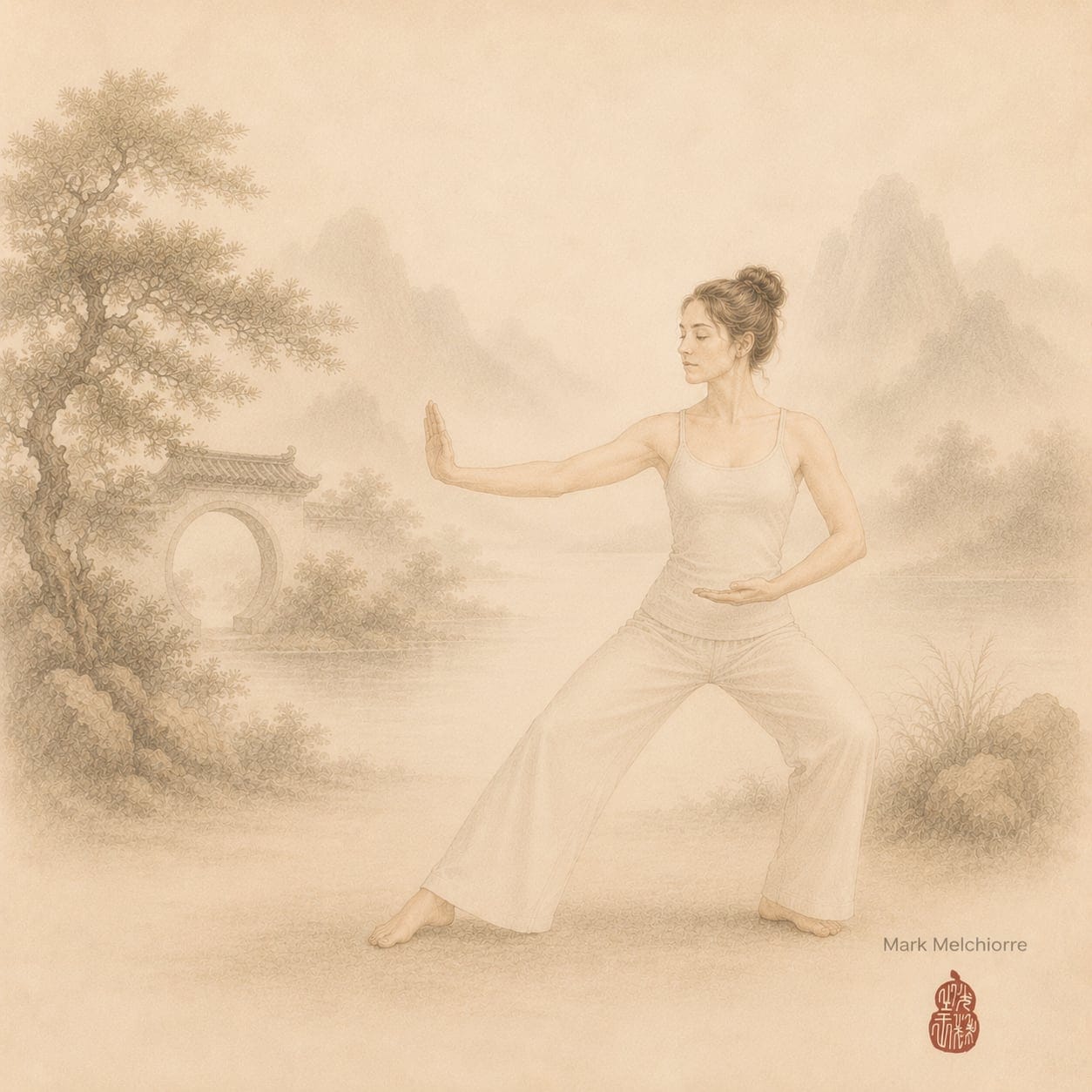
A Gentle Gateway Into Tai Chi & Qigong
Developed to make traditional energy practices approachable for modern life, Tai Chi Easy™ blends flowing movement, breath awareness, moving meditation, and mindful relaxation into a format that almost anyone can begin.
The emphasis is not on perfection or performance.
It is about cultivating:
- ease in the body
- steadiness in the mind
- healthy circulation of energy
- resilience under stress
- a deeper connection with yourself
Relaxation
Breath
Balance
Energy
Mindfulness
Tai Chi Easy™ was developed through the work of the Institute of Integral Qigong and Tai Chi (IIQTC) and qigong teacher Dr. Roger Jahnke, O.M.D.
The approach was designed to make traditional tai chi and qigong practices more accessible for modern practitioners while preserving the core principles of breath, mindful movement, relaxation, and energy cultivation.
Designed for Real Life
One reason Tai Chi Easy™ has become so widely appreciated is its accessibility.
The movements can be adapted for many ages, energy levels, and experience backgrounds.
Beginners
No previous experience is required. The movements are simple enough to begin immediately while still offering depth over time.
Busy & Stressed Adults
The practice helps interrupt chronic tension patterns and creates space for calm, breath, and mental clarity.
Healthy Aging & Mobility
Gentle movement and mindful coordination can support balance, posture, flexibility, and overall vitality.
A Calm, Supportive Learning Environment
My classes emphasize presence over pressure.
Students are encouraged to move at their own pace while gradually developing body awareness, breath coordination, and confidence in the practice.
Rather than treating tai chi and qigong as complicated systems to master, the focus is on direct experience:
- feeling grounded
- relaxing unnecessary tension
- moving with awareness
- cultivating energy naturally
“The goal is not to force energy — but to create the conditions where it can move freely.”
Benefits Students Often Notice
Experiences vary from person to person, but many students report improvements in areas such as:
- reduced stress and tension
- improved balance and coordination
- easier breathing
- greater body awareness
- increased relaxation
- improved energy levels
- mental clarity
- a stronger sense of groundedness
Begin Practicing in a Supportive Environment
Practice with calm guidance in a supportive environment designed to help you develop movement, breathing, awareness, and internal balance gradually over time.
Continue Exploring
Explore additional practices and resources that support balance, mindfulness, and daily well-being.
Nine Phases Qigong
A qigong practice that guides you step-by-step—from first sensing qi in the body to refining and integrating it at deeper levels of mind and spirit.
Breath Medicine
An introduction to the transformative role of breath in cultivating relaxation, awareness, resilience, and energetic harmony.
Yin-Yang Balancing Qigong
A calming practice that harmonizes opposing energies within the body while encouraging grounding, fluidity, and centered awareness.
Continue Exploring
Explore additional practices and resources for balance, mindfulness, and daily well-being.
Nine Phases Qigong
A step-by-step qigong practice for sensing, refining, and integrating qi.
Breath Medicine
Explore how breath supports relaxation, awareness, and resilience.
Yin-Yang Balancing Qigong
A calming practice that cultivates grounding, fluidity, and inner balance.
Practices
Explore practices for balance, awareness, and daily well-being.
Recommended Resources
Books, videos, and learning materials for further study and inspiration.
Note that due to varying translation styles, Tai Chi may be written as Taiji, and Qigong may be written as Chi Kung or Chi Gong.